
Subchondral Bone Marrow Edema of the Hip: Intraosseous PRP Treatment
Specialist Orthopaedic and Regenerative Medicine Clinics in Valencia, Alicante and Castellón
✓ Specialist assessment of hip bone marrow oedema and subchondral bone lesions
✓ Intraosseous PRP and ultrasound-guided intra-articular PRP injections
✓ Personalised regenerative medicine and non-surgical treatment options
Have you been diagnosed with subchondral bone marrow oedema of the hip and are experiencing persistent pain when walking or bearing weight? At Regenerat Clínica, our orthopaedic and regenerative medicine specialists assess whether intraosseous platelet-rich plasma (PRP) injections, intra-articular PRP or other treatments may be appropriate for your condition. We review your MRI findings and explore personalised treatment options to help manage pain and improve hip function. Book your specialist assessment.
Subchondral bone marrow oedema of the hip is an abnormal finding within the bone marrow, often located beneath the joint cartilage of the femoral head or acetabulum. It may be associated with hip osteoarthritis, stress-related bone injuries, subchondral insufficiency fractures or other underlying conditions, causing persistent hip or groin pain and difficulty bearing weight.
Depending on the underlying diagnosis, non-surgical and regenerative medicine treatments may be considered. At Regenerat Clínica, we assess whether intraosseous PRP injections and other minimally invasive procedures may have a role in selected patients, alongside appropriate bone protection and rehabilitation.
Subchondral Bone Marrow Edema Treatment: Intraosseous PRP and Non-Surgical Options
Have you been diagnosed with subchondral oedema of the hip or bone marrow oedema on an MRI scan and would like to explore treatment options?
Do you experience persistent hip or groin pain when walking, standing or bearing weight?
Have rest, medication or previous treatments failed to provide sufficient improvement?
Would you like to know whether intraosseous PRP injections or ultrasound-guided intra-articular PRP may be appropriate for your hip condition?
Are you concerned about the possibility of hip surgery or joint replacement and would like a specialist assessment of the available alternatives?
At Regenerat Clínica, our orthopaedic specialists in hip bone marrow oedema and regenerative medicine provide personalised assessments of subchondral bone lesions. We evaluate whether intraosseous platelet-rich plasma (PRP), intra-articular PRP, conservative treatment or other specialist procedures may be appropriate, taking into account the underlying diagnosis, MRI findings and available clinical evidence.
Our specialists review the location and extent of the bone marrow lesion, associated cartilage damage and any evidence of subchondral fracture or osteonecrosis before recommending treatment.
Depending on the diagnosis, treatment may include protected weight-bearing, rehabilitation, selected magnetotherapy protocols, intraosseous PRP injections or intra-articular PRP procedures. Intraosseous PRP remains an emerging treatment for hip bone marrow lesions, and evidence of its effectiveness is limited. It cannot guarantee bone healing or prevent surgery.
Some patients with subchondral insufficiency fractures, osteonecrosis or progressive structural damage require prompt specialist management, as delaying appropriate treatment may increase the risk of complications.
Our aim is to relieve hip pain, improve mobility and preserve joint function, prioritising appropriate non-surgical treatments whenever medically reasonable.
We welcome patients seeking subchondral bone marrow oedema treatment and intraosseous PRP injections in Valencia, Alicante and Castellón, with consultations available at our clinics in Catarroja, Torrent, Gandía, Castellón de la Plana and Elche.
Book an Appointment

Specialists in Treating Subchondral Bone Marrow Edema of the Hip with PRP Injections
I am Miguel Alfonso Porcar recognized specialist in the treatment of hip bone edema with rest and non-steroidal analgesics.
In more severe cases of hip bone edema that do not respond to more conservative treatments, we use bioregenerative platelet-rich plasma therapies.
At Regenerat Traumatology Clinic we are specialists in the diagnosis and treatment of the main hip ailments and injuries.
Our goal is to determine the cause of your hip pain, perform diagnostic tests to determine the extent of your hip pain or injury.
Once the diagnosis is made, we will apply the most appropriate regenerative traumatology treatment to relieve your pain and help you recover your well-being as soon as possible.

English-Speaking Orthopedic Doctor for International Patients
Dr. Carlos Mairal, an orthopedic surgeon and trauma specialist in regenerative medicine, provides expert medical care in English for international patients.
He specializes in ultrasound-guided infiltrations using platelet-rich plasma (PRP) for the treatment of hip conditions such as gluteal tendinitis, trochanteric bursitis, osteoarthritis, and bone edema, promoting faster healing and long-lasting relief.
If you’re seeking advanced, non-surgical treatment for hip pain and prefer to communicate in English, Dr. Mairal offers personalized care in a professional and welcoming environment.
Book your appointment today and receive expert care from an English-speaking orthopedic doctor.
What is bone edema of the hip?
Hip pain is a common ailment that can affect people of all ages.
Bone edema occurs when the medullary zone of the bone, i.e. the trabecular or spongy tissue, suffers inflammation or injury.
Bone edema is the accumulation of fluid in the bone that causes swelling in the bone marrow.
Bone marrow is thespongy tissue in the center of bones.
The bone has blood vessels which, in the event of trauma, can cause internal bleeding. If the inflammatory fluid is not reabsorbed and persists over time, it can lead to osteonecrosis.
The anatomical areas and bones most prone to bone edema are the hip, knee, talus and calcaneus (foot and ankle bone edema), tibia, shoulder and wrist.
What is subchondral bone edema?
A subchondral edema is an inflammation or injury that occurs in the medullary zone of the bone, specifically under the cartilage, just below the joints.
This type of edema is characterized by localized pain in the affected area, which intensifies with activity and decreases with rest.
It may manifest with joint effusion, soft tissue edema, lameness and limited joint mobility.

Causes of bone edema of the hip
- Bone edema of the hip is often related to osteoarthritis, often referred to as “wear and tear” arthritis. These are cartilage lesions in which the cartilage breaks down and the joints become painful.
- It may be due to fracture, joint injury, trauma or acute bone overload. They are the main cause of hip bone edema.
- A bone infection (osteomyelitis) sometimes causes fluid accumulation.
Osteoarthritis
If you have osteoarthritis, bone edema may be a sign that your disease has worsened and you may have developed subchondral cysts.
These cysts occur in places where the cartilage is damaged. The cartilage hardens and forms fluid-filled sacs (cysts) in the joint. The cysts take up space in the joint, making it narrower, which further wears down the cartilage until eventually, the bone rubs against the bone.
As you lose more and more cartilage, the nerves become exposed. You may feel more pain and have less range of motion. This is especially true in cases of osteoarthritis of the hip.
If the hips are not properly aligned, the condition can worsen. Misalignment puts pressure on a joint that is already inflamed.
Compared to people without edema, those with hip bone edema are more likely to have more severe osteoarthritis symptoms and to worsen more rapidly, typically within 15 to 30 months.
Bone edema of the hip due to injury
Bone marrow edema may occur with fractures and other serious bone or joint injuries. This is especially true when the injury affects the hip.
After an injury, different types of fluid can accumulate in a bone; blood, or fluids released by fibrosis (scar tissue) or necrosis (tissue death).
Bone hematoma, trabecular fracture, subchondral stress fractures and injuries, intraosseous edema or bone contusions are terms that have been used interchangeably to describe the traumatic origin of these injuries.
Bone injuries caused by a direct blow, applied shear forces, by the impact of several bones against each other, or by tensile forces in the context of an avulsion injury may result in a bone hematoma.
Other causes of bone marrow edema
- Stress fracture of the hip due to repeated impact and stress on a weight-bearing joint.
- Bone tumors, in which the fluid weakens the bone and increases the risk of fracture.
- Bone infection (osteomyelitis).
Symptoms of bone edema
Pain is the main symptom of bone edema and is localized in the affected area.
- This pain usually increases with physical activity and decreases with rest.
- If bone edema persists, pain may manifest itself even during night rest.
- Sometimes, joint effusion and soft tissue edema may occur.
- Depending on the location of the bone edema, you may experience lameness and a reduction in joint range of motion.
Diagnosis of hip bone edema
Dr. Alfonso Porcar, expert in hip pathologies and injuries, diagnoses intraosseous edema of the hip.
- To do this, he will initially evaluate your medical history and then perform a physical examination or evaluation.
- At Clinica Regenerat we use high-resolution ultrasound-guided ultrasound to evaluate the injured tissues.
- For the accurate diagnosis of intraosseous edema we use a magnetic resonance imaging test. With it we can detect a pattern of bone edema, as well as determine the severity and extent of the edema and the affected area.
Treatment of hip bone edema
Some types of bone marrow edema of the hip are more difficult to treat than others.
We distinguish between reversible lesions such as transient edema syndrome and irreversible lesions such as osteonecrosis.
If the problem is related to trauma or repetitive motion, it is usually cured with rest, non-steroidal analgesics, vitamin D drugs to increase bone density and physiotherapy treatment.
How do you treat bone edema in the hip?
If conservative treatments fail, advanced therapies include intraosseous PRP injections to promote bone healing, core decompression surgery to reduce internal pressure, or shockwave therapy to stimulate recovery. These options aim to relieve pain and restore function in persistent cases of hip bone edema.
Hip bone marrow edema and magnetotherapy.
Low frequency magnet therapy accelerates the regeneration of bone tissue, improving inflammation and pain by reducing the pressure exerted by the liquid on the affected bone.
Sessions of at least 3 hours per day are recommended.
In the Regenerat clinic we have the latest technologies.
We have reached an agreement with the company Biomag to incorporate 5 portable magnetotherapy machines, which are available to our patients.
Severe cases may require intraosseous cement injections, platelet-rich plasma or surgery.
Subchondroplasty with Intraosseous Injections
Subchondroplasty using cement can also be executed through the intraosseous injection of cement to reinforce the structure of the affected bone.
Bone cement is a biological material composed of calcium phosphate, which solidifies upon contact with bone at body temperature, thereby enhancing bone strength.
How is the treatment with PRP and intraosseous infiltrations performed?
The technique involves administering a subchondral infiltration in the hip, targeting the subchondral surfaces of both the acetabulum and femoral head.
Following this, an additional intra-articular PRP infiltration is performed under ultrasound guidance at 15 days and again at 30 days.
This approach has a significant regenerative effect as it neutralizes inflammatory cytokines.


Treatment of Hip Bone Edema with Platelet Rich Plasma PRP
Platelet Rich Plasma or PRP is a product derived from the patient’s own blood (autologous) with a concentration of platelets and other bioactive elements.
Intra-articular and/or intra-osseous PRP infiltrations stimulate the natural healing response, promoting the recovery of mobility, strength, and the normal function of injured tissue.
They are the preliminary treatment before replacing the affected or injured area with a prosthesis or artificial joint.
For the treatment of intraosseous edema and bone lesions in the hip, it is advisable to perform an intraosseous infiltration under sedation and radiographic control in the focus of the bone edema or trabecular fracture, accelerating the healing process.
The combination of intraosseous and intra-articular PRP injections have improved pain and functionality of the affected hip, reducing the period of sick leave due to edema and delaying the need for arthroplasty.
Why choose Regenerat Clinic to treat your hip bone edema in Valencia, Gandía, Denia, Jávea..?
Specialists in the treatment of hip bone marrow edema in Valencia
In the field of treatment of hip pain and pathologies, Regenerat clinic is your reference center.
We are pioneers in Valencia in implementing intraosseous infiltrations for the treatment of intraosseous edema and hip bone edema.
State-of-the-art technology
Ultrasound-guided ultrasound scanners that facilitate diagnosis. State-of-the-art , less invasive treatments that relieve and in many cases eliminate your hip pain in Valencia, offering better health and quality of life.
Patient Testimonials
Our patients value our experience and multidisciplinary approach to treating intraosseous hip edema, which effectively eliminates pain and facilitates the recovery of their activity post-treatment.
We offer solutions that are not available in other clinics and hospitals through regenerative treatments for hip pain, which often help avoid the need for surgery.
Not Quite Ready to Book an Appointment?
If you think we can help, start by finding out whether you are a suitable candidate for treatment.
Take the first step. We’ll take care of the rest.
If you are experiencing pain and/or reduced mobility in your knee, hip, shoulder or other joints, our Regenerat clinics specialise in regenerative medicine treatments.
Our treatments aim to support the repair and regeneration of damaged or diseased cells and tissues, potentially delaying or, in some cases, avoiding surgical procedures such as arthroscopy or knee and hip replacement surgery.
Take the first step towards a more active life with less pain through Regenerative Medicine.
Tell us briefly about your symptoms, and we’ll help you understand the next steps.
If you prefer, discover the available treatment options, which conditions they may be suitable for and when it may be worth considering them.
Complete this form to download a guide covering the main regenerative medicine treatments we offer for different musculoskeletal conditions.
DOWNLOAD the Regenerative Medicine GUIDE that Alleviates your pain WITHOUT SURGERY!
"*" indicates required fields
https://youtube.com/shorts/Y4WFSbCY0AA


Causes of Hip Pain Treatable by a Hip Specialist
The primary cause of acute hip pain is often a fracture of the femoral neck.
Hip fractures are particularly common in the elderly population due to underlying conditions such as osteopenia and/or osteoporosis
Other causes and treatments for hip pain:
- Gluteal tendinopathy injections: For overuse injury of the hip tendons that are activated when we walk, stand and transfer weight from one leg to the other during walking.
- Hip bursitis injection treatment: A procedure to address inflammation of one or more bursae in the hip. Bursae are small, fluid-filled sacs located between bones and soft tissues, such as tendons or muscles, that act as cushions to reduce friction.
- Trochanteric bursa injection: A treatment for inflammation of the bursa that cushions the greater trochanter bone of the hip. This condition typically causes pain in the lateral region of the hip
- Hyaluronic acid injection for arthritis: Osteoarthritis, a degenerative joint disease, is more common in the elderly. In this condition, the cartilage within the joint gradually wears away, leading to pain, swelling, stiffness, and restricted movement in the affected area.
- Bone marrow edema of the hip: A condition characterized by increased interstitial fluid within the bone marrow, typically in the femur. It can result from inflammation or injury in the medullary area (inside the bone) of the hip, often due to trauma, overuse, or underlying conditions
Hip Bone Marrow Oedema Treatment Specialists in Valencia, Castellón and Alicante
Specialists in Intraosseous PRP, Subchondral Bone Lesions and Regenerative Medicine
At Regenerat Clínica, we assess subchondral bone marrow oedema of the hip, bone marrow lesions and associated joint conditions to determine the most appropriate treatment for each patient.
Our orthopaedic and regenerative medicine specialists evaluate hip bone marrow oedema, subchondral bone injuries and associated osteoarthritis. We consider personalised treatment options including intraosseous platelet-rich plasma (PRP), ultrasound-guided intra-articular PRP, rehabilitation and other selected procedures, according to the underlying diagnosis and available clinical evidence.
We have five clinics in Catarroja, Torrent, Gandía, Castellón and Elche, offering specialist orthopaedic assessments and regenerative medicine consultations. We also welcome patients from surrounding areas, including Dénia, Jávea, Torrevieja, Vila-real, Burriana, Aldaia and Alaquàs.
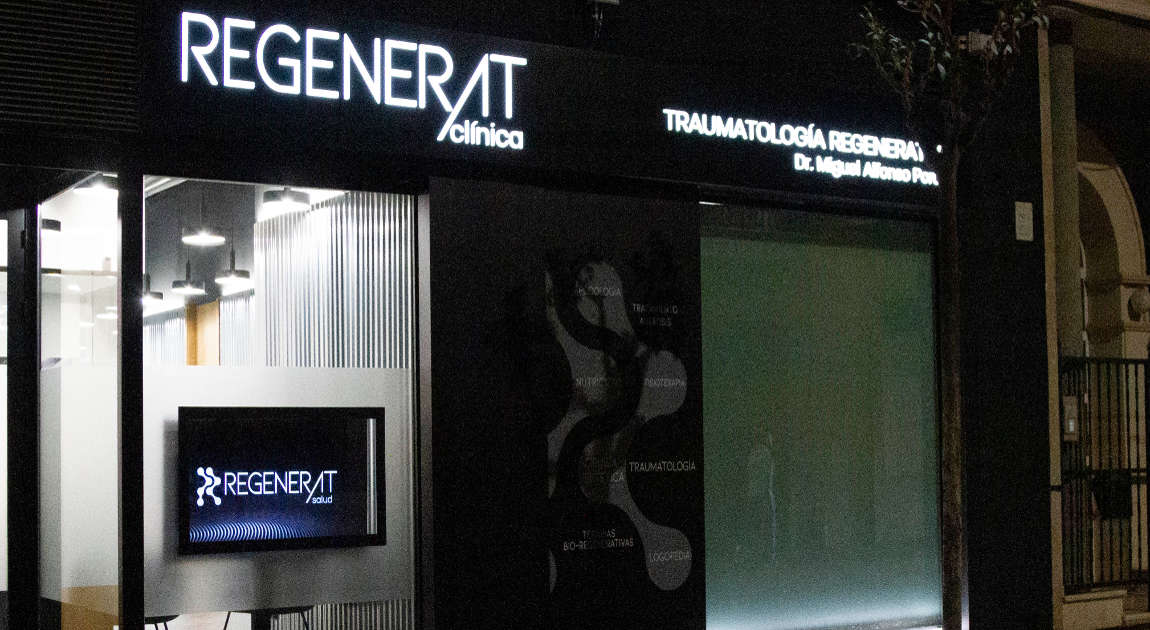
Book a personalised assessment with our hip bone marrow oedema specialists in Catarroja. We assess subchondral bone lesions, persistent hip pain and associated joint conditions, considering intraosseous PRP and other regenerative medicine treatments where clinically appropriate.
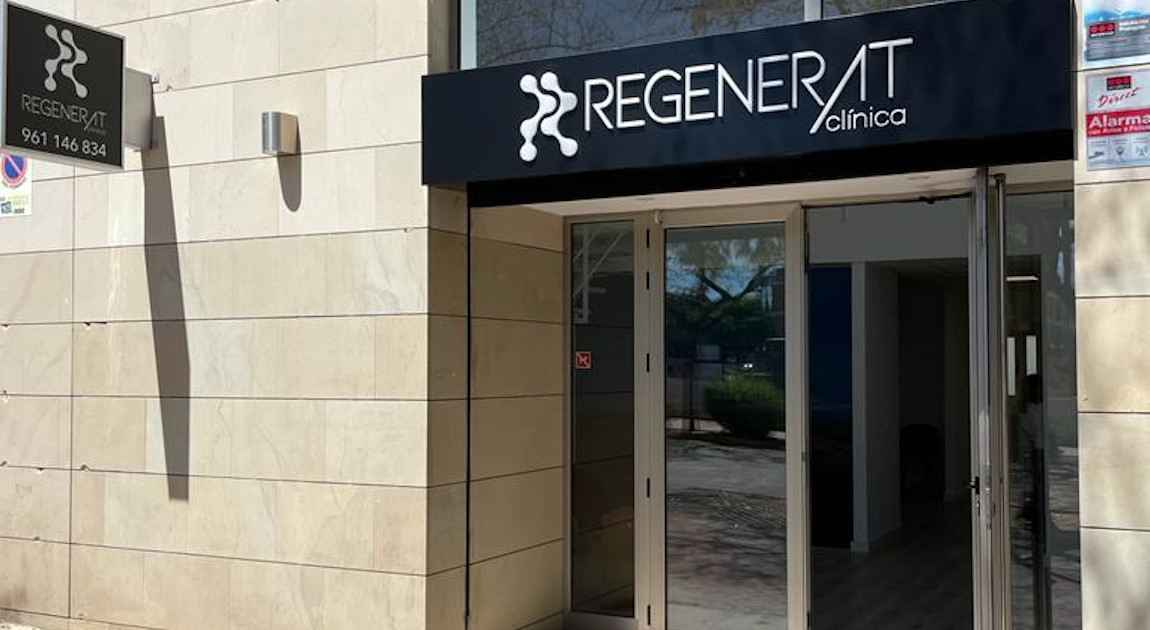
At our orthopaedic and regenerative medicine clinic in Torrent, we assess hip bone marrow oedema and associated subchondral injuries, exploring personalised treatment options including intraosseous PRP where appropriate. We also welcome patients from Aldaia, Alaquàs and nearby towns.

Book an assessment at our hip bone marrow oedema treatment clinic in Gandía. We assess subchondral lesions and persistent hip pain, evaluating intraosseous PRP and other non-surgical approaches where clinically appropriate. We also welcome patients seeking specialist hip bone oedema treatment near Dénia and Jávea.

At our orthopaedic and regenerative medicine clinic in Castellón, we assess hip bone marrow oedema, subchondral bone lesions and persistent joint pain, considering intraosseous PRP and personalised non-surgical treatments where appropriate. We also welcome patients seeking subchondral hip oedema treatment near Vila-real and specialist hip bone marrow oedema care near Burriana.

Book a personalised assessment with our hip bone marrow oedema specialists in Elche. We assess subchondral bone injuries, persistent hip pain and appropriate regenerative medicine options. We also welcome patients seeking specialist subchondral hip oedema treatment near Torrevieja.
Diagnosed with Hip Bone Marrow Oedema? Explore Intraosseous PRP and Regenerative Medicine Treatments
Tell us where your hip hurts, how long you have experienced symptoms, what your MRI report shows, which treatments you have already tried and which clinic you would prefer to visit. We will help you arrange a personalised orthopaedic assessment and explain the available treatment options, their potential benefits, limitations and costs. Take the first step towards improving hip function and managing persistent pain.
Contact information
☎ 961 146 834
info@regeneratclinica.com
Schedule
Mornings - 9:30am - 14:00pm
Afternoons - 16:00pm - 20:00pm
Saturday & Sunday - Closed
Clínic in Catarroja
Traumatólogo en Catarroja en Carrer Emili Ferrer Gómez, 4, 46470 Catarroja
Clínic in Torrente
Traumatólogo en Torrente en C/ del Mestre Lorenzo Fuertes Julvez, 14, 46901, Torrente
Clínic in Gandía
Traumatólogo en Gandía C/ Ciutat de Laval, 23, 46702 Gandia, Valencia
Clínic in Castellón
Traumatólogo en Castellón Carrer d’Alacant, 39, 12004 Castelló de la Plana
Clínic in Elche
Traumatólogo en Elche C/ Almòrida, 8, 03203 Elx, Alicante

